
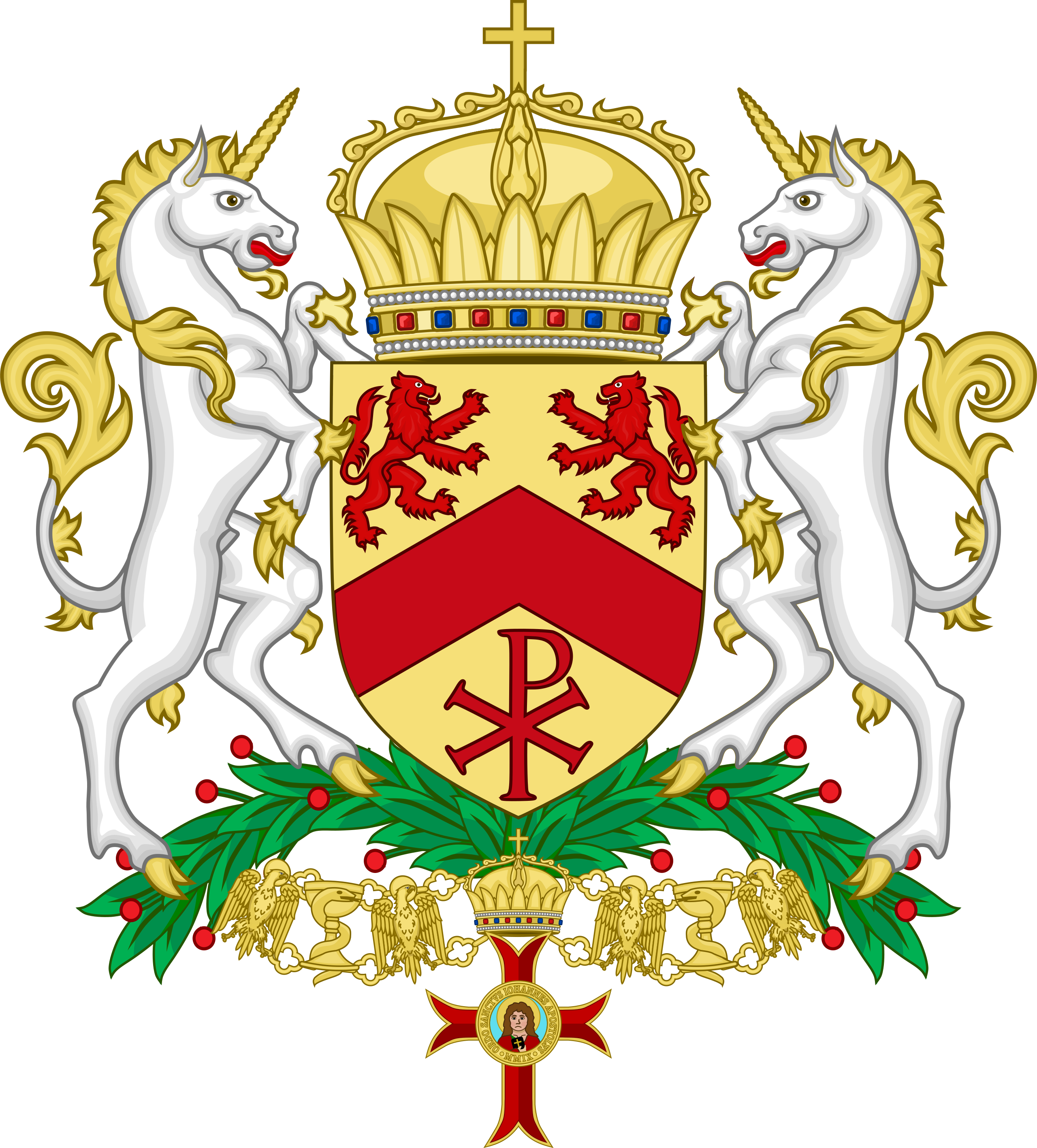
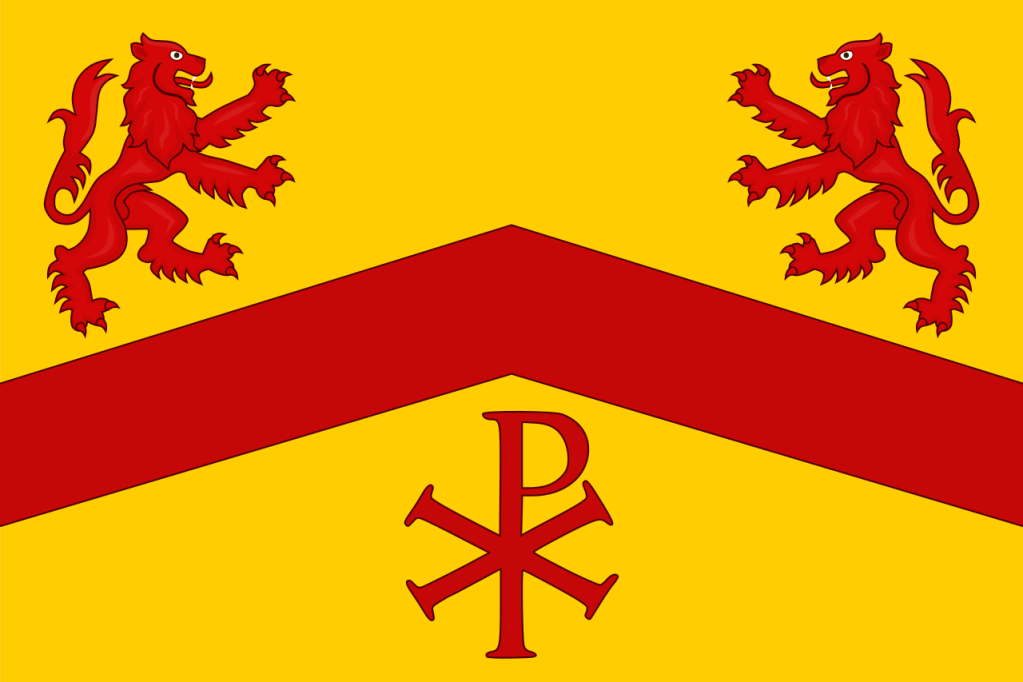
The Empire of Austenasia is a constitutional monarchy, and is ruled by Emperor Alexander VI as head of state.
Austenasia is not a ceremonial constitutional monarchy such as those in the United Kingdom, Belgium, or Sweden, but rather what is known as an executive constitutional monarchy, such as those in Jordan, Liechtenstein, Monaco and Morocco. This means that although the Emperor does not hold absolute power, he nevertheless holds substantial powers which are exercised at his personal discretion, holding a position of proactive executive leadership rather than a ceremonial office.
The Monarch is advised by the Privy Council, and is also held accountable by the Senate, a body which can pass advisory resolutions and ultimately has the power to appoint a Regent should the Monarch should they be considered incapable of ruling.
Although the monarchy is technically hereditary by default, in practice the line of succession is chosen by the Senate, as empowered to do so by Parliament since 2024. Previously this power was held by Parliament itself, which resulted in two unrelated Emperors ruling after Terry I before his son ascended to the Throne.
The Monarch holds extensive executive, legislative, and judicial powers, as well as several more ceremonial rights and duties. Their consent is required for the passage of Acts of Parliament, and they can legislate independently with Imperial Decrees and Imperial Edicts. They approve candidates for Prime Minister, with whom they implement government policy via the Cabinet, and they hold absolute power over Crown Dependencies independently of the central government. Furthermore, the Monarch serves as Judge of the Imperial Court, appoints most judges and juries in the judiciary, and serves as the ultimate interpreter of the law.
Emperor Alexander VI
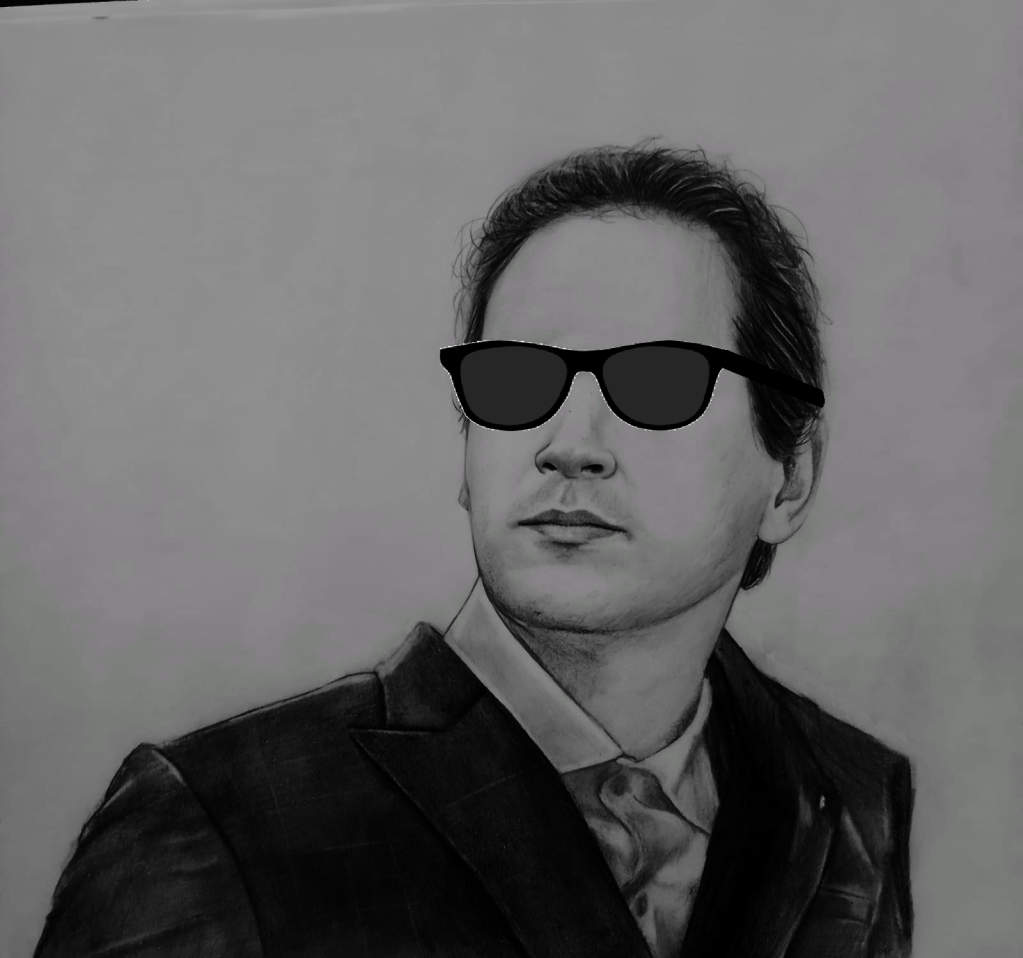
The incumbent Emperor of Austenasia, Alexander VI ascended the Throne on 30 September 2025, having been appointed Heir to Aggelos I by the Senate.
Prior to being appointed Heir, Alexander – then known as Crown Prince Shiro – was a member of the Senate who also served in several Cabinet positions, the first in 2018. Appointed Princeps Senatus (chairman of the Senate) in April 2024, he played a vital role in advising and supporting Emperor Aggelos I during the latter’s reign.
Also serving as the head of state of Zenrax, where Alexander VI reigns as Shiro I, he oversaw friendly diplomatic co-operation between Austenasia and Zenrax from 2016 onwards, culminating in him being recognised as holding the rank of Caesar in November 2023.
Austenasian Monarchs are numbered in reference to all previous monarchs of the Empire’s many land-claims. Alexander therefore adopted the ordinal of “the Sixth” in reference to Alexander V of Macedon, the highest numbered Alexander to have ruled over what is now Austenasian territory (namely the Empire’s claims of Elmythia and Kaiomenia).
Previous Monarchs
- Emperor Terry I: r. 20 September 2008 – 16 February 2010
- Emperor Esmond III: r. 16 February 2010 – 20 September 2011
- Emperor Declan I: r. 19 December 2010 – 20 January 2013
- Emperor Jonathan I: r. 20 January 2013 – 29 September 2024
- Emperor Aggelos I: r. 29 September 2024 – 30 September 2025
Terry I (2008-10)
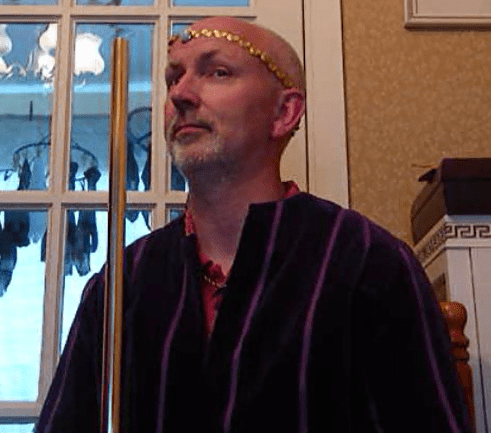
Terry I was the nation’s first Emperor, one of the family of four who declared their house in Carshalton independent to form the Empire of Austenasia on 20 September 2008. He supervised his son, Crown Prince Jonathan, who as Prime Minister oversaw the day-to-day running of the government.
During the reign of Terry I, Austenasia began to tentatively expand, with some friends of the family claiming their own house as another part of the Empire, and some small uninhabited territories being claimed. Terry I abdicated in February 2010.
Although he played a largely ceremonial role during his reign, the now Lord Terry is loved and respected as a founding figure of the Empire. In May 2021, he was named Pater Patriae (“Father of the Nation”), a title under which he autonomously governs the capital, Wrythe.
Esmond III (2010-11)

Esmond III was second in line to the Throne upon the abdication of Terry I. Although unrelated to the Imperial Family, he had been given a place in the Line of Succession by Parliament (in what had been intended to be a purely nominal honour). When his friend Crown Prince Jonathan refused to inherit the Throne so as to remain Prime Minister, the choice fell to Esmond as second in line, who accepted.
This soon led to the declaration of the Austenasian Civil War as Terry’s other child, Princess Caroline, claimed to be the rightful successor. Although many were sympathetic to her position, the principle that Parliament should have ultimate control of the line of succession won out, with Caroline surrendering after Esmond’s forces prevailed militarily and he won a referendum arranged to settle their competing claims.
Esmond chose the regnal number of the Third in reference to the two Anglo-Saxon kings named Edmund who had previously reigned over Austenasia’s land claims, wishing to claim equality with and succession from the monarchs of the past (and controversially reasoning that his own name was “close enough” to justify a continuity of numbering).
It was during Esmond’s reign that Austenasia began to claim a Roman inheritance, with the civil war bringing about much reflection on the significance of the title of “Emperor”. Most notably, Esmond also took proactive leadership of the government, transforming the holder of the Throne from a mostly ceremonial to an actively executive monarch.
Eventually, his ambitions proved too much, and – after much political and diplomatic intrigue – a friendly rival of his, King Declan of Wilcsland, was invited to share the Throne in order to dilute Esmond’s influence. Esmond retained the Throne in a nominal capacity from March 2011 until September of that year, when his title of Emperor was removed. Although his reign came to an end in sorry circumstances, his reputation has been greatly rehabilitated, and he is today remembered mostly for the golden age of court culture that grew up around his reign, as well as for greatly expanding Austenasia’s local influence with the creation of vassal states in the neighbouring British town of Carshalton.
Declan I (2010-13)

Declan I was declared joint Emperor by Parliament on 19 December 2010, after forces loyal to him took control of the Austenasian vassal states in Carshalton in opposition to Esmond III. He became sole Emperor in September 2011, and reigned until his abdication in January 2013.
The reign of Declan I has a controversial legacy. He did not visit Austenasia during his reign as Emperor, instead ruling via the internet from his home kingdom of Wilcsland (of which many suspect he saw Austenasia as little more than a vassal), and intentionally encouraged an absolutist view of his reign. However, his remote rule – communicating with Parliament via the Internet – laid much of the logistical groundwork for an online government, enabling the Empire to expand soon after his reign to administer claims from around the world.
During his reign, the Emperor became the undisputed leader of the nation. The soft power held by the Monarch that had in many cases been unofficially exercised by Esmond III became written into law under Declan with the promulgation of the current Constitution. After his abdication in Austenasia, Declan remained ruler of some of the local nations in Carshalton until June 2013, when he was deposed and new vassal monarchs appointed by Jonathan I.
Jonathan I (2013-24)
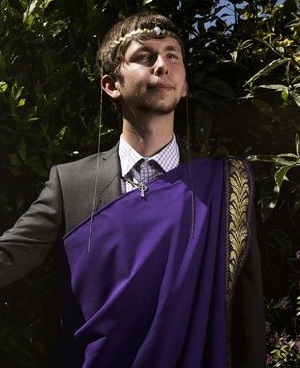
Jonathan I, the son of Terry I, ascended to the Throne on 20 January 2013 upon the abdication of Declan I. The official Founder of the country and Prime Minister to all three of his predecessors, Emperor Jonathan I would reign upon taking the Throne for longer than any other Austenasian Monarch before or since.
The reign of Jonathan I saw a huge expansion of the Empire both in terms of size and population, with the annexation of numerous territorial claims around the world and the inclusion of an increasingly large number of non-residential subjects. It was during his reign that Austenasia grew from a small, locally-based nation of a dozen people in Carshalton to a world-spanning Empire of well over a hundred.
Jonathan I also oversaw the official recognition of Christianity as Austenasia’s state religion, the promulgation of numerous comprehensive pieces of legislation (many of which he authored), and the solidifying of a late Roman/Byzantine cultural influence on Austenasia which had begun under Esmond III.
By early 2024, after eleven years on the Throne, Jonathan I signalled his intention to step away from leading the nation. After implementing various reforms – perhaps the most notable being to change the Line of Succession from a hereditary to a meritocratic basis – he instituted a regency in April, before abdicating officially on 29 September 2024.
The now Lord Jonathan continues to advise the government in various capacities, and is a member of the Senate. His primary office is now as Vizier of Rushymia, by which he governs the said crown dependency in the name of the Emperor.
Aggelos I (2024-25)
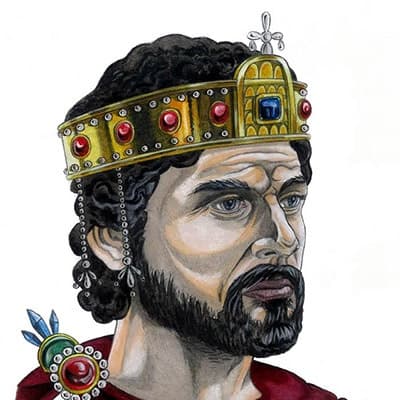
His Imperial Majesty Aggelos I ruled as Emperor of Austenasia for a year and one day, from 29 September 2024 to 30 September 2025, having previously served as Prince Regent during the last months of the reign of Jonathan I.
Prior to his reign, Aggelos had a long history of involvement with and contributions to Austenasia, founding a Town in 2016 and having two non-consecutive tenures as a Representative in Parliament. The ruler of the Hellenic nation of Imvrassia from 2011-16 and again since 2020, Aggelos oversaw an increasingly close and friendly relationship between Imvrassia and Austenasia helped by his friendship with Jonathan I, with whom he bonded over their shared Orthodox Christian faith and love of Greco-Roman history.
Aggelos was the first Heir appointed by the Senate on a meritocratic rather than a hereditary basis. Upon the abdication of Jonathan I, he ascended the Throne as Emperor of Austenasia.
The reign of Aggelos I saw many challenges, most notably a coup attempt by Andrew Musgrave, the then Prime Minister. Musgrave unsuccessfully attempted to depose the Emperor in June 2025 after Aggelos called for early elections, and was ultimately expelled by Parliament. However, the reign of Aggelos I also saw constitutional reform, large territorial expansion in North America, and the entrenchment of democratic parliamentary representation for non-residential subjects.
Ultimately, also being responsible for the governance of Imvrassia, Aggelos I announced his intention to abdicate upon the first anniversary of his ascension to the Austenasian Throne. He remains a Senator, and thereby helps to advise his successor, the incumbent Emperor Alexander VI.
 Empire of Austenasia