
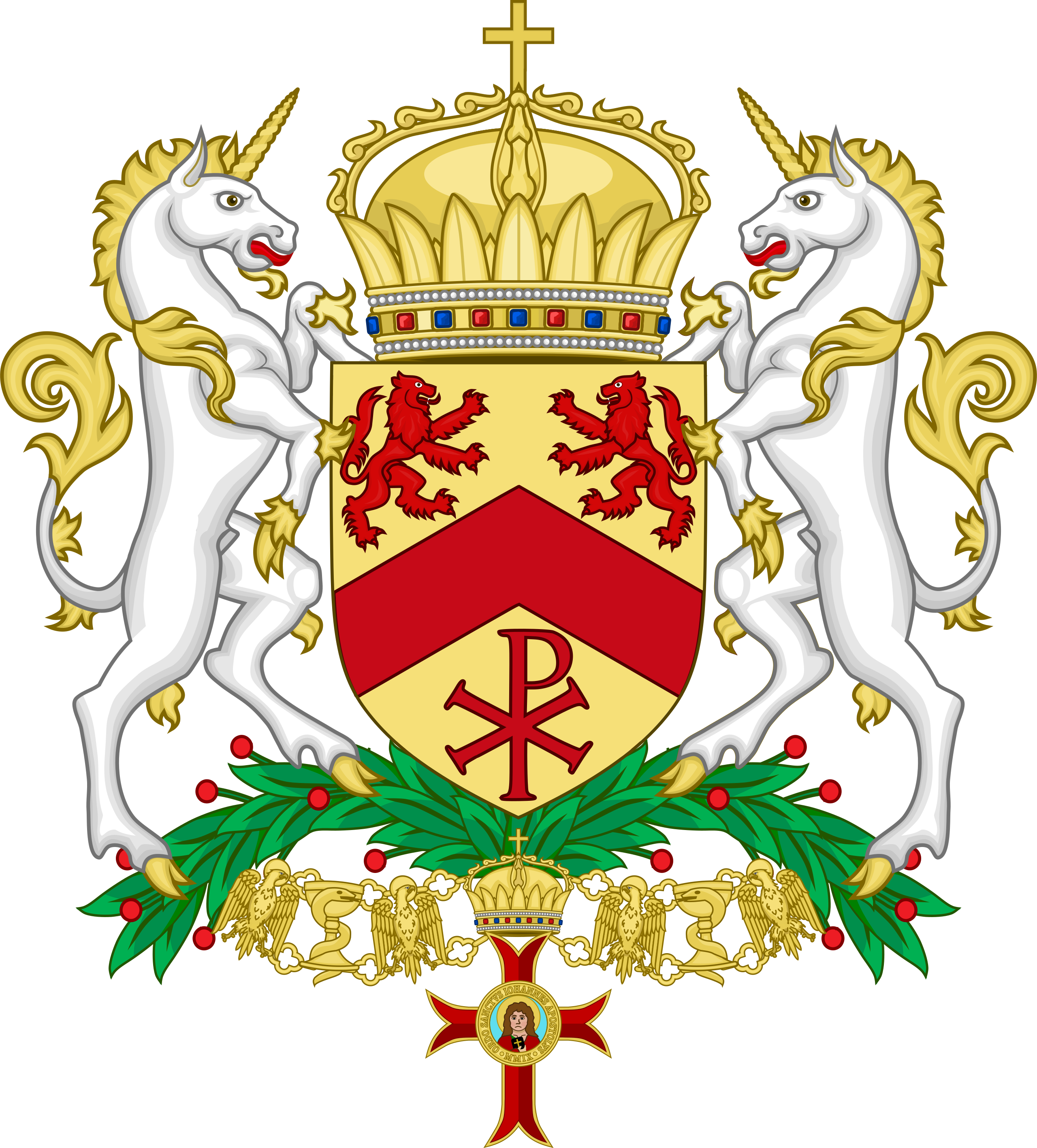
Yesterday saw a public holiday marking Emperor Day, celebrating the birthday of Emperor Alexander. The event was marked by an honours list, a diplomatic project, and well-wishes from international leaders.
Emperor Day was first established in 2008 to commemorate the birthday of the reigning Emperor of Austenasia, at the time being Emperor Terry. The holiday has been observed throughout the Empire annually for the following 18 years, with the exception of 2024 owing to the abdication of Emperor Jonathan prior to the holiday.
The holiday is ordinarily a reserved and personal affair unlike most other non-religious holidays, ordinarily marked by a celebratory meal, or the Emperor hosting a gathering of dignitaries. The exception to the rule was Emperor Esmond III, who published an honours list for the occasion in 2010.
This year’s Emperor Day celebrations are, like Emperor Esmond’s in 2010, highly unusual in their observance this year, with the higher-profile celebrations marking a rare break in tradition.
As announced earlier in the week, the Foreign Office launched a scheme to open a temporary window for unsolicited diplomatic requests from prospective partners, in the ongoing project to expand the Empire’s diplomatic reach within the micronational community. The application form can be found here, and will be open until the 1st of April.
The Emperor awarded honours to outgoing-Deputy Prime Minister Lord Green and outgoing-Speaker of the House Lord Koff, in the wake of latest parliamentary bill scheduled to dissolve both Etchemin-on-Kennebec and Oppidum Tubae. Lord Green was awarded a hereditary peerage to retain their current title as Baron of Etchemin-on-Kennebec following it’s dissolution, and was named as the Empire’s honourary thnickel bearer. Likewise, Lord Koff was granted the same rights to retain the titles of Duke of Aesti and Baron of Oppidum Tubae following his pending retirement from the micronational community.
An edict to confirm these honours will be issued within the coming days.
 Empire of Austenasia
Leave a comment